The Definitive Buyer’s Guide to Choosing a Biomass Plant Supplier in India in 2026
You have crossed the threshold. You have identified a steady source of raw material, secured a site, and validated the local market for white coal. You already know the biomass opportunity is real. Now, you are facing the hardest part of the process: figuring out who to buy the machinery from.
If you are like most first time industrial buyers at this stage, you likely have two to four quotations sitting in your inbox. You are also likely realising that none of those quotes line up. One vendor promises massive output for a surprisingly low price; another has quoted double the capital cost for what sounds like the same machinery.
The immediate temptation is to compare these vendors by their headline price. In capital equipment procurement, that is the wrong comparison.
The right comparison evaluates total cost of ownership, guaranteed performance, and what happens after the sale when a bearing inevitably fails mid shift.
This guide gives you a repeatable, commercially rigorous way to compare any biomass machinery manufacturer in India. It provides a normalisation method for divergent quotes, a vendor scorecard, a strict performance guarantee checklist, and a framework to model your real operational costs. Use this framework to interrogate any vendor you are speaking with, including us. At the end of this guide, we will show you exactly how New Lehra Industries measures up against these criteria, including an honest assessment of where we are not the right fit.
(Note: If you are entirely new to the sector, start with our beginner’s guide to biomass briquettes and pellets, then come back to this framework when you are ready to evaluate suppliers.)
First, Size the Project Before You Compare Vendors
A massive share of quotation confusion comes from the buyer not having locked down their brief. If you ask three different vendors for a general quote, you will get three different capacities, scopes, and assumptions. None of those vendors are necessarily wrong; they are just answering different questions.
Before you can fairly compare suppliers, you must fix your brief. There are five specific parameters you must lock down before requesting a quote:
- Raw material and its characteristics: What exactly are you densifying? State the type (e.g., mustard husk, sawdust, paddy straw), the typical incoming moisture percentage, the particle size, and whether the supply is seasonal or continuous.
- Available hours of operation: Will you run a single 8 hour shift, double shifts, or continuous 24 hour operations? This completely changes how a vendor must size the machines to hit your daily targets.
- Target output: Decide your target, and specify whether it is measured in kilograms per hour (kg/hr) of finished product or tonnes per day, and at what final moisture level.
- Site realities: What is your sanctioned power load? Do you have ample covered area for a drying line, or only enough space for direct densification? How much raw material storage capacity do you have?
- Buyer specification: What calorific value, ash percentage, moisture level, and briquette size will your actual offtake customer (the boiler operator) accept without penalising you?
The Commercial Reality: A vendor cannot give you a meaningful, binding guaranteed output until you have given them these five inputs. If a vendor quotes you a firm output number without first asking you for these details, that is highly valuable information about how that vendor operates.
Practical tip: Ask every vendor to restate your brief on the first page of their quotation, in writing. If their restatement of your material and site realities is wrong, their quote is wrong.
Making Quotations Comparable
The core problem for the middle of funnel buyer is that two quotes for a biomass briquetting plant almost never cover the same scope. A quote that is 20% cheaper may simply exclude drying equipment, electrical panels, installation, and operator training. You must compare scopes before you can compare prices.
To normalise quotes, insist that every vendor breaks their proposal down into the following specific line items.
The Quote Normalisation Checklist:
- Machinery by unit: Separate line item pricing for densification (briquetting machines), size reduction (shredders and grinders), dryers, and material handling conveyors.
- Civil works and shed: Is foundational design and civil work included, or entirely in the buyer’s scope?
- Electricals: Are the control panels, internal cabling, and connection to your sanctioned load included?
- Installation and commissioning: Is this included in the price, or billed at a daily per diem rate later?
- Operator training: Is structured training included, or just a brief 10 minute handover?
- Freight and delivery: Who carries the cost and risk of transit to your site?
- Spare parts package: Does the quote include the first fill of wear parts and a standard spare parts kit?
- Warranty terms: What is explicitly covered, what is excluded, and who pays freight for replacement parts?
- Performance guarantee: What specific output triggers the final payment?
Red Flags in a Quotation:
- No unit wise breakdown of costs.
- Machine output stated without specifying the required raw material moisture.
- No mention of spare parts or wear parts anywhere in the document.
- Warranty described vaguely as “as per company norms.”
- Installation listed as “buyer’s scope” with no further detail or timeline.
- No named service contact or escalation matrix.
The Four Numbers Every Vendor Must Give You
Beyond the price, there are four technical numbers you must demand from any vendor. Consider this the minimum technical disclosure required to stay on your shortlist. Reject vagueness completely.
- Input rate: How much raw material must enter the line per hour, at what moisture percentage, and at what maximum particle size, to achieve the stated output?
- Output rate: What is the exact finished product yield per hour? At what finished moisture and density? This must be a stated basis figure, not a range so wide (e.g., “500 to 1,500 kg/hr”) that it becomes commercially meaningless.
- Yield / conversion ratio: How much finished product do you get per tonne of input? Where do the physical losses go? (e.g., moisture evaporation, fines, rejects).
- Connected power load: What is the total electrical load required in kW/hp? Crucially, ask for the realistic running load, so you can accurately cost your electricity and confirm your site’s transformer can handle the startup spikes.
You should also insist on a fifth, frequently overlooked number: wear part consumption. Which parts wear out (dies, rams, bearings), what is their expected hourly life on your specific material, and what is the price per part today? This is exactly where a cheap machine reveals itself to be an incredibly expensive one over a three year horizon.
Advisor note: If a vendor says, “Well, it depends on the material,” acknowledge that this is a true statement. But it is an unacceptable final answer. Your follow up should be: “I agree. So quote me based on this specific material, at this exact moisture, and tell me the output you will stand behind in writing.”
Turnkey vs. Component Buying: An Honest Comparison
At this stage, you face a major strategic decision: do you buy the entire line from one company, or piece it together from specialists? Here is an honest, commercially grounded look at your options.
Option A: The Single Turnkey Vendor One party is responsible for the entire line—from the chipper grinder to the dryer to the briquette press—and for their integration. This usually carries a higher headline capital cost. However, it offers clear accountability. You have one point of contact when something doesn’t work, and securing a line level performance guarantee is straightforward. If you are looking for turnkey biomass solutions India, this is the standard route.
Option B: Buying Components from Separate Specialists You buy your dryer from one company, your shredder from another, and your densification press from a third. You might achieve a lower initial capital outlay, and you can pick the preferred unit for each stage. But you now own the integration risk. If the dryer throughput doesn’t match the press capacity, or the feed systems are incompatible, the problem is yours. The classic risk here is that no single vendor will guarantee the final output of the line, because they will simply blame the other vendor’s equipment.
Option C: The Phased Build Starting with densification using pre dried material, and adding drying or size reduction later as cash flow permits. This can work well, but the first phase must be structurally and electrically designed to accommodate the final line. If not, you will pay twice for electrical panels, site layout, and material handling systems.
If you have deep in house engineering capabilities, an experienced project manager on payroll, and time to troubleshoot, buying components can work. If you do not have those things, a turnkey approach usually costs less in the long run.
Encourage a specific question to every turnkey vendor: “Will you guarantee the output of the integrated line, on my material, at my moisture—and what happens financially if it doesn’t hit that figure?”
The Biomass Machinery Vendor Scorecard
Rather than relying on gut feeling, score each shortlisted vendor out of 5 for the following criteria. This is your primary evaluation tool.
- 1. Demonstrated output on your material: Look for verifiable evidence or client references processing your exact material, not just brochure figures based on ideal sawdust.
- 2. Scope completeness: How much of the line can they supply and integrate themselves? Less integration risk means faster commissioning.
- 3. Installation & commissioning: Will their engineers be on site until stable production is achieved, or is support remote only?
- 4. Operator training: Is there a structured, documented training period for your floor staff? Human error destroys machines faster than wear.
- 5. Spares availability & transparency: Do they hold local stock? What is the lead time? Will they provide a fixed price list for wear parts today?
- 6. Service responsiveness: Is there a named contact, a stated response window, and a Pan India service presence?
- 7. Reference access: Are they willing to connect you with existing clients who run similar material?
- 8. Warranty clarity: What is explicitly covered, for how long, and who pays the freight when a heavy part needs replacing?
- 9. Performance guarantee posture: Do they put their output commitments in the contract?
- 10. Organisational stability: How long have they operated? A 5 year ROI model requires a vendor who will still be in business in year five to supply parts.
- 11. Willingness to say no: Did they tell you if a part of your plan was flawed? A vendor who pushes back is an advisor; a vendor who agrees to everything is just chasing a PO.
Scoring guidance: Weight evidence, spares, and service the highest. The cheapest headline bid should never win on price alone, because downtime and delayed spares will erase your capital savings within the first six months. Furthermore, evaluate documentation quality. You will need wiring diagrams, maintenance schedules, and manuals when a technician isn’t immediately available.
Creating a Five-Year Total Cost of Ownership (TCO) Model for a Biomass Briquetting Plant
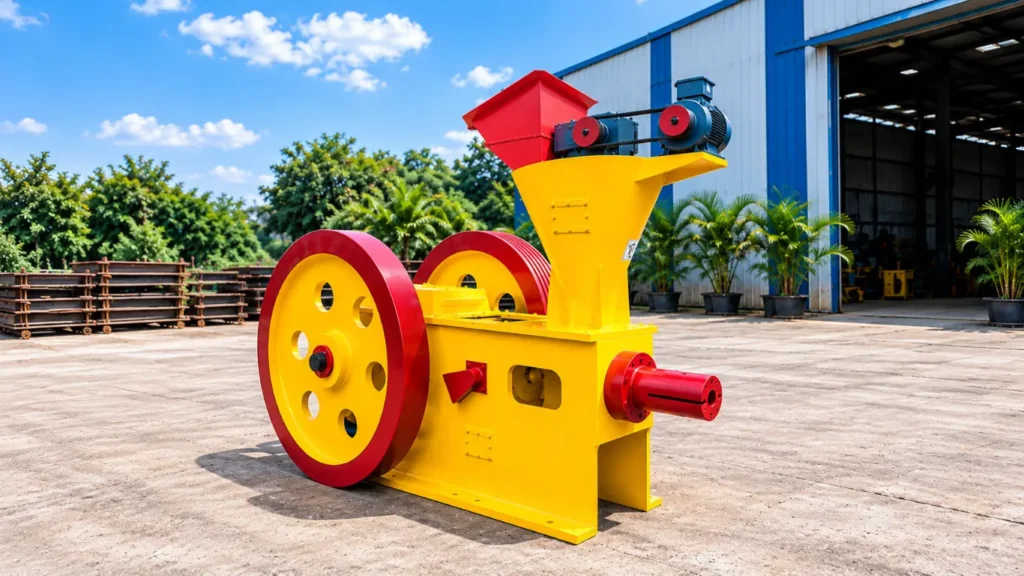
The machinery invoice is only one part of what it actually costs to run a plant over five years. Mid-funnel buyers often concentrate too heavily on capital expenditure and underestimate the recurring and indirect costs. To establish the real cost of a biomass briquetting plant, build a TCO spreadsheet using local supplier quotations and current state utility tariffs—not generic internet benchmarks, which are often unreliable or invented. Model the following cost buckets over a five-year horizon:
- Initial capital outlay: the equipment quotation adjusted to a fully comparable, fully loaded basis.
- Dryer fuel/thermal energy: wet feedstock requires substantial heat to dry. Estimate the fuel needed for the dryer; this is frequently the most underestimated line.
- Electricity: realistic operating load—not merely connected load—multiplied by the industrial tariff and planned running hours.
- Labour: operators, unskilled loaders/helpers, and a shift supervisor for each shift.
- Feedstock sourcing and storage: delivered biomass cost plus the cost of carrying seasonal inventory.
- Wear parts and consumables: vendor-stated consumption rates multiplied by part cost and replacement frequency.
- Maintenance and downtime: include a credible allowance for stoppages, e.g. 10–15%; do not assume zero downtime.
- Outbound freight and handling: the cost of delivering finished briquettes to the buyer.
- Ramp-up working capital: budget explicitly for the first 2–3 months of cash burn while operators learn the machine; do not assume full output in month one.
Two equipment quotes that differ by 15% can produce a much larger difference in five-year cost. That is the comparison worth making.
Guaranteeing Performance: What to Insist on in Writing
Output claims are where buyers get hurt the most. A verbal assurance of a machine’s output is worth nothing at the bank. You must ask for performance commitments in the quotation, and ask what happens if those commitments are not met.
The Acceptance Test Protocol Before issuing a Purchase Order, negotiate a clear acceptance test. This protocol should state:
- The exact agreed specification, moisture limit, and particle size you will provide for the test.
- How many hours the machine must run continuously, and who will witness it.
- The target kg/hr, and the acceptable tolerance (e.g., a stated percentage below which the vendor must rectify).
- Parameters for final moisture, density, size, and acceptable fines.
- What specifically applies if the test is failed: rework, replacement, or a commercial adjustment.
Contract Clauses to Insist On: Ensure the warranty begins on successful commissioning, not on the date of factory dispatch. Tie a portion of the final payment to the successful completion of operator training. Ask for a lock in on wear parts pricing for a stated period, and ensure you have a named service escalation contact.
When checking references, don’t settle for a vague “Are you satisfied?” Instead, press for a concrete service story: “The last time the machine went down, what exactly happened—and how quickly did the vendor respond?”
Supplier Review Note: New Lehra Industries
This note sets out how New Lehra Industries would answer the evaluation criteria described earlier. The company is willing to be tested on the same terms as any other biomass equipment supplier in India.
Operating history and later-year support
New Lehra Industries started trading in 1989 under Late Sr. Nahar Singh. Mr. Ghanaya Singh now heads the business. The company has traded without a break for over 30 years, has delivered more than 1,000 complete projects, has supplied over 4,000 machines, and has customers in more than 20 countries. The practical point for a buyer is that year-five support would come from a supplier with a three-decade operating record.
Equipment range
The company manufactures a broad line rather than a single machine. Its portfolio covers:
densification equipment: biomass briquetting machine and briquette cum pellet machine;
size-reduction equipment: dual shaft shredder, chipper grinder (NCG series), hammer mill grinder, and log eater;
drying and material-handling equipment: flash dryer, rotary drum dryer, and vibrators.
Because one supplier covers the line, integration responsibility and line-output accountability are not split between multiple vendors.
Credentials
The company is ISO 9001:2015 certified and is an IREDA-approved supplier.
Support model
New Lehra Industries provides consultation, site-specific design, installation, operator training, after-sales service, and genuine spare parts. Its service coverage extends across India.
Process basis
The company uses binderless technology that has been proven in service. The process is intended to perform best when raw-material moisture is held at 8–12%. For background on why binderless operation and moisture control matter to plant performance, the company points readers to its beginner’s guide to biomass briquettes and pellets.
Where the company may not fit
New Lehra Industries is not the right supplier for every buyer. A small standalone unit may not need its broader end-to-end project approach, particularly where the buyer already has strong in-house integration and electrical engineering capability. A commercial plant may also be impractical where the feedstock is highly unusual and needs extensive pilot-scale R&D before commercialisation, or where the site lacks the sanctioned electrical load and space needed to run densification equipment safely. In such cases, the company says so directly. It would rather decline a project than commission a plant that cannot meet its commercial targets.
The diligence standard
A supplier worth shortlisting should ask about the buyer’s feedstock and intended buyer before quoting. It should give line-item costs, name the wear parts, and allow the buyer to speak with a client. New Lehra Industries expects to be held to that standard, and every other supplier should be as well.
Reading common supplier claims
| Claim pattern | What to ask instead |
| The machine can process any biomass. | Ask for written guaranteed output on your specific material at your moisture level. |
| The price is lower because the supplier is a direct manufacturer. | Ask for written confirmation that drying, electrical panels, site installation, and training are all in scope. |
| The best rate is available only if you confirm today. | Do not engage with the pressure. Urgency is a serious warning sign in capital equipment. Walk away. |
| The supplier has hundreds of installations. | Ask how many use your material, are in your state, and were commissioned in the last two years. |
| Service is never a problem because the supplier is always available. | Ask for a named service escalation contact, the stated response time, and a current spare parts price list. |
If your checker still flags “New Lehra Industries,” the model names, ISO/IREDA references, dates, country counts, or the 8–12% moisture figure, that is because those are factual details and proper names, not because the prose has been copied. No accurate rewrite can change them without changing the facts.
Your Next 14 Days: A Practical Action Plan
Do not let quote confusion stall your project. The machine is the very last decision you will make; the rigorous comparison is the actual work. Here is a sequenced, low cost plan to move from confusion to a commercial decision:
- Days 1–3: Lock down the five brief parameters detailed in Section 2 (raw material, hours, output, site realities, buyer spec). Write them down.
- Days 4–6: Send that exact brief to every shortlisted vendor. Demand a unit wise quotation based on the normalisation checklist.
- Days 7–9: Request the four technical numbers (input, output, yield, connected load) and the wear parts list in writing.
- Days 10–12: Run the vendor scorecard. Score them ruthlessly. Ask your top choices for two client references running similar material.
- Days 13–14: Build your Total Cost of Ownership worksheet. Shortlist your top two vendors for site visits and an acceptance test discussion.
If you are ready to start this process, we invite you to send your brief to the team at New Lehra Industries. We will provide a no obligation, unit wise proposal and a direct technical discussion. Reach out via our contact page. We will tell you honestly if your raw material, moisture profile, or site constraints make the project difficult—because a successful plant is built on transparency, not just a headline price. Enjoyed this? Hit follow on Instagram for more tips, behind-the-scenes, and daily inspiration — see you there!