Biomass Briquettes in India: An Honest Beginner’s Guide to White Coal
Curious about biomass briquettes and pellets in India? A raw materials, buyers, real costs and what to check before investing—including when not to.
The Two Problems That Created an Industry
India has two massive problems sitting right next to each other.
On one side, the industrial sector is feeling the squeeze. Factories, textile mills, and food processing plants are paying increasingly high prices for coal and fossil fuels. At the same time, environmental regulations are tightening, penalizing heavy carbon emitters and forcing industries to look for cleaner alternatives.
On the other side, we have an agricultural crisis. Millions of tonnes of crop residue are burned in open fields every single season. This practice creates severe air quality crises across northern India and literally burns away a material that holds real energy value.
The industry that connects these two problems is biomass densification. This is the process of taking loose, low-density agro-waste and compressing it into dense, high-energy briquettes and pellets. Because of how it burns and how it is used as a direct substitute for fossil fuels, this compressed fuel is commonly called “white coal.”
This guide is for anyone wondering whether this is a real industry, whether there is a genuine opportunity in it, and whether they personally could or should get involved. If you are a farmer with leftover crop residue, an industrialist tired of coal bills, or simply someone researching the sector, you are in the right place.
We won’t tell you it is easy money—because it isn’t. But we will show you how the sector actually works, honestly. This article is educational. It is designed to help you decide your next steps, including deciding not to proceed at all.
What Actually is White Coal?
If you are new to the sector, the terminology can be confusing. Let’s start with the basics.
“White coal” is an umbrella term for biomass that has been compressed into a solid fuel. But there are distinct differences between the formats. Briquettes are larger, cylindrical or hexagonal blocks (usually 60mm to 90mm in diameter) meant for large industrial boilers. Pellets are much smaller (usually 6mm to 8mm thick) and are designed for automated feeding systems in smaller boilers or specialized residential/institutional heating.
Why do we bother compacting raw biomass in the first place? Loose straw or husk is light and bulky. Transporting it is essentially paying to move air. It also burns unevenly and too quickly. Compacting it solves transport costs, standardizes the moisture, and creates a slow, consistent burn that industries require.
Most modern plants in India use binderless technology. Some older or alternative processes require adding a chemical binding agent (like glue or molasses) to hold the waste together. Binderless densification relies entirely on high pressure, high heat, and the natural lignin (the organic polymer that makes plants rigid) present in the biomass itself. The trade-off? Because you aren’t using artificial glue, you avoid buying binders and you get a much cleaner, lower-ash burn. However, it demands that your raw material is processed to the exact right particle size and moisture level.
Before going further, here are a few key terms to know:
- Calorific Value (CV): The amount of heat energy the fuel produces when burned. Higher is better.
- Moisture Content: The percentage of water in the material. Too much, and it won’t compress.
- Ash Content: The non-combustible waste left behind after burning. Lower is better.
- Densification: The physical act of squeezing loose material into a solid block.
- Offtake: An agreement from a buyer to purchase your finished product.
Finally, we need to bust a few common industry myths:
- “Any biomass works in any machine.” — False. Particle size, natural moisture, silica content, and abrasiveness vary enormously between a pine log and a pile of rice husk.
- “You can run it on wet material straight from the field.” — False. Drying is a real engineering requirement and a significant operational cost.
- “The machine is the business.” — False. Securing your raw material supply and locking in a confirmed buyer matter far more than the steel you buy.
Who is This Actually For? An Honest Fit Check
Now coming to the most important part of this guide. Setting up a biomass briquetting plant is an industrial project, not a passive side hustle. By disqualifying yourself early you can save a lot of time and capital.
You may be a good fit for this industry if:
- You have (or can reliably and legally secure) a steady stream of raw material within a short radius of your proposed site.
- You have, or can lease, suitable industrial land with adequate three-phase power connections.
- You can fund your own working capital through the initial 3 to 6 month ramp-up period where production is finding its rhythm.
- You have already spoken to local industries and found a buyer before you buy any machinery.
You may want to pause and reconsider if:
- Your raw material supply is highly seasonal, and you have no plan or space for off-season storage.
- You have no identified buyer and assume “if I make it, someone will buy it.”
- Your site has no heavy power access or no space for drying raw material in the sun or via machines.
- You are expecting a hands-off investment that runs itself while you sit in an office.
- Your only motivation for starting the project is to capture a government subsidy or grant.
The people who succeed in this sector tend to be the ones who secured the raw material and the buyer first, and the machine last. It is also incredibly common for viable projects to be partnerships. A farmer or Farmer Producer Organisation (FPO) with the material might partner with an industrialist who has capital, and a trader who handles the offtake. That kind of shared-risk partnership is normal and often highly successful.
The Raw Material Question: What You Have Determines Everything
If you take only one lesson from this guide, let it be this: your raw material dictates your entire business model. You cannot simply buy a standard plant and feed it whatever is available that day.
Here is a look at the input spectrum in India:
| Raw Material | Availability Pattern | Handling Difficulty | Best Suited For |
| Rice Husk | Very consistent near milling hubs. | Low (flows easily, naturally small). | Direct briquetting (often needs no shredding). High ash content. |
| Paddy Straw | Highly seasonal (post-harvest). | High (bulky, tough to handle). | Requires heavy shredding first. Great energy value if managed well. |
| Wood Waste / Logs | Consistent near forestry/sawmills. | Medium (heavy, requires heavy machinery). | High calorific value, low ash. Requires chippers and hammer mills. |
| Bagasse (Sugarcane) | Seasonal (crushing season). | Medium (fibrous). | Great binder, but often comes with high initial moisture. |
| Mustard Husk | Seasonal. | Low to Medium. | Excellent burning properties, very popular in Northern India. |
Your raw material choice drives everything downstream. It dictates which type or variant of shredder machine you buy, how much drying load your plant must handle, and the final calorific value of the processed waste which your buyer will pay for.
The single most commonly underestimated reality in this sector is moisture. To make a high-quality binderless briquette, your raw material needs to enter the densification machine at a strict 8–12% moisture range. This is a target the plant must be engineered to reach, not something the material naturally arrives with. Fresh straw or wood can be 30% to 50% water. If you try to compress wet material, the water turns to steam under high pressure and the briquette explodes as it exits the machine. Drying is non-negotiable.
You also have to confront seasonality and storage. If you rely on mustard husk, what happens to your plant in the six months when it isn’t harvested? This question kills more projects than machine quality ever does. You must have the working capital to buy bulk material in-season and the physical land to store it safely from the monsoon.
Economics differ sharply by state. Transporting light, fluffy biomass over 100 kilometers will destroy your profit margins. You must think locally, not nationally.
The Demand Side: Who Actually Buys This Stuff?
It is surprisingly common to see business plans that detail every aspect of production but fail to name a single customer. Demand for white coal certainly exists, but you have to know where to look.
Who the buyers are: The primary buyers are facilities running industrial boilers and captive power plants. This includes pharmaceutical manufacturers, brick kilns, dyeing and textile units, food processing companies, and paper mills. Essentially, any factory that needs to generate massive amounts of steam or heat is a potential customer.
Why they switch: Cost is the primary driver. When international coal prices spike, biomass becomes highly attractive. Furthermore, regulatory pressure is mounting. The Commission for Air Quality Management (CAQM) and various state pollution control boards are increasingly restricting or outright banning the use of pet coke and traditional coal in certain zones. Many industries are switching to white coal simply to remain legally compliant.
How supply relationships work: Supply is rarely a handshake deal. It works through spot purchases or formal contracts. Buyers will impose strict quality specifications. They will test your briquettes for calorific value, moisture, and ash content. If you deliver a truckload of briquettes that crumble to dust or contain 20% moisture, the boiler operator will reject the load, and you will pay the freight cost to haul it back.
The honest warning: Demand is highly regional. A state-of-the-art biomass plant in a region with no industrial boilers nearby is a logistics problem before it is a production problem. White coal is heavy. What’s the point of travelling 500km just to find a buyer? It will also impact your margins. They will literally vanish in diesel costs.
Before doing anything else, phone three industrial units within 100 km of your proposed site. Ask what fuel they currently use, what they pay for it, and what specifications they would require to switch to briquettes. That is free market research, and it is invaluable.
What a Plant Actually Involves (And What it Costs)
A biomass briquetting plant is not a single machine. It is an interconnected ecosystem. If your dryer can only process one tonne per hour, but your briquetting press can handle two, your total output is one tonne per hour. The weakest link sets the pace.
Here is the process flow in plain English:
- Size Reduction: You cannot feed a tree branch or a bale of straw into a briquette press. You need shredders and grinders to reduce the material to a uniform powder or fine flake. Dual-shaft shredders are used for bulky agricultural bales. Chipper grinders devour wood and logs. Hammer mills are used for final, fine grinding.
- Drying: Once sized, the moisture must be reduced to that critical 8–12% window. You will use either flash dryers (blowing hot air through pipes for fine, lighter materials) or rotary drum dryers (tumbling heavier, wetter materials in a heated drum).
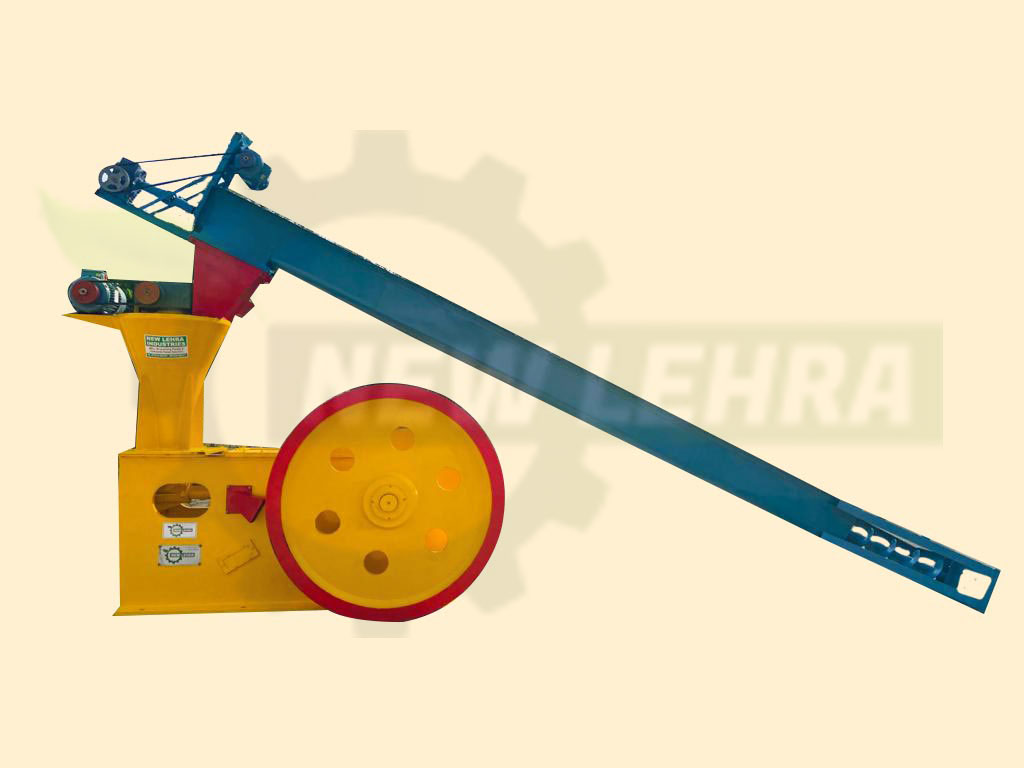
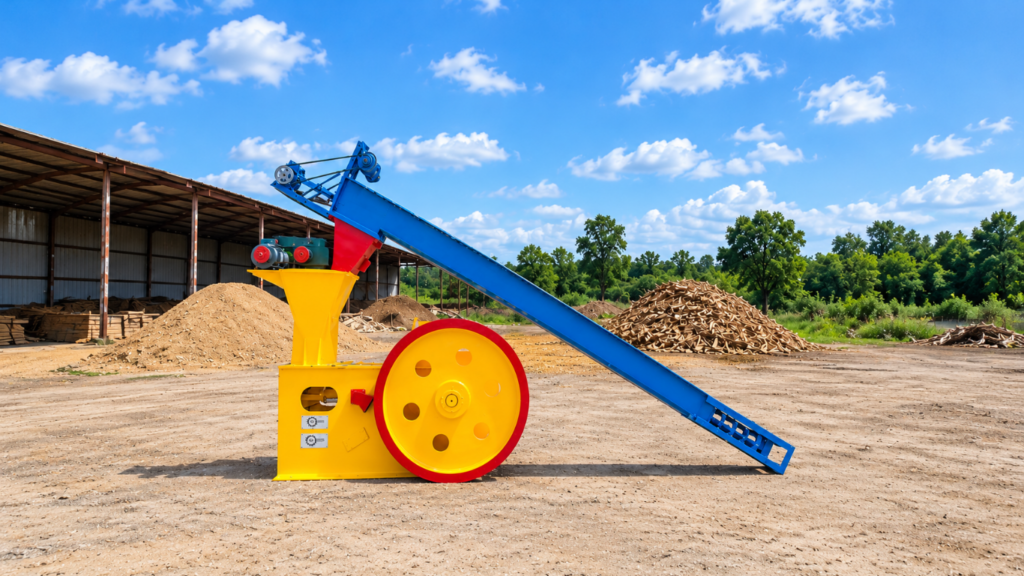
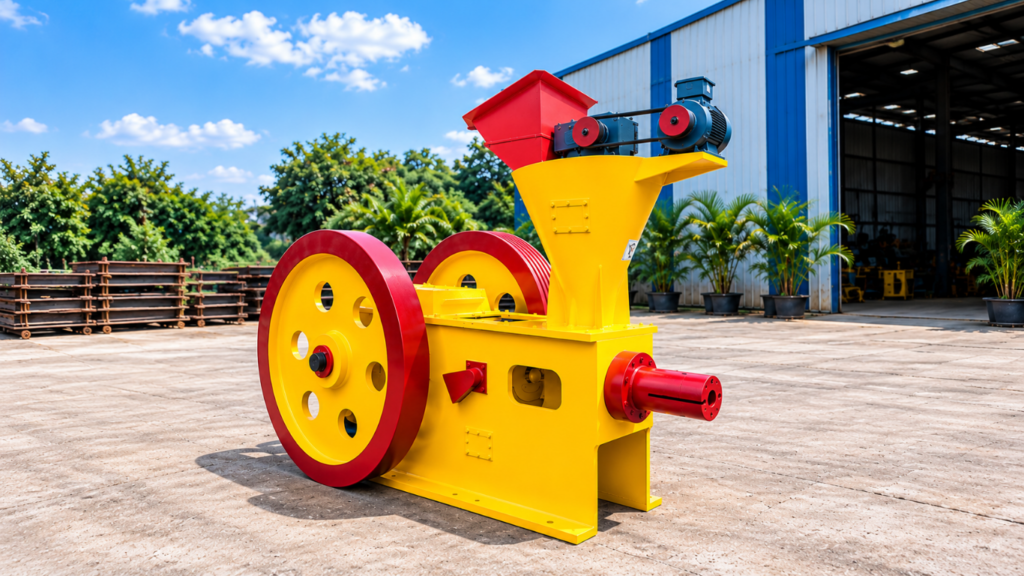
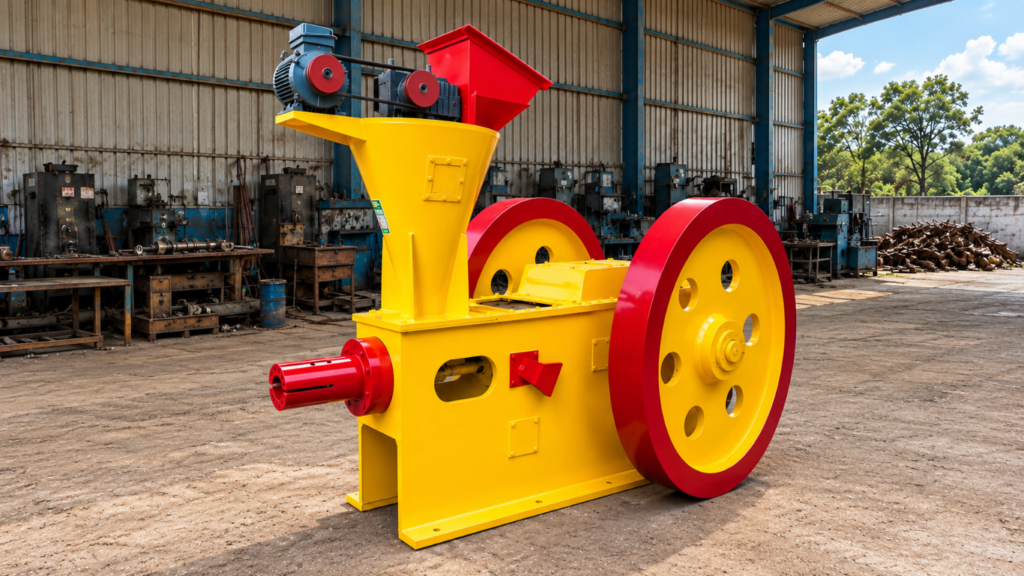
- Densification: The dried, sized powder is fed into briquetting machines or a briquette cum pellet machine. Here, a massive ram or heavy rollers force the material through a die under extreme heat and pressure, melting the natural lignin to bind it into a solid log or pellet.
- Handling: You need vibrators to screen out dust, and conveyors to move material between machines so you aren’t paying dozens of laborers with shovels.
If you are researching the biomass briquetting plant cost, we are deliberately not quoting a total single figure here. Any single figure you see online is either outdated, theoretical, or describing a vastly different scope of equipment. Instead, ask any supplier to break their quote into these specific categories so you can compare apples to apples:
- Machinery and core equipment
- Dryers and material handling (conveyors)
- Civil works, foundations, and weather-proof sheds
- Power connections, transformers, and electrical panels
- Labour and operator training
- Working capital through the ramp-up phase
- Consumables and wear parts (dies, rams)
- Raw material procurement and bulk storage
- Freight and logistics
Commissioning takes time. Expect a steep learning curve in the first few months. Do not model your business plan assuming month-one will operate at 100% capacity.
Choosing a Biomass Machinery Manufacturer in India: What Actually Matters
Buying a machine is the easy part. Making it run profitably on Indian raw material in Indian weather conditions is the real challenge. When selecting a partner, you must look past the brochure.
The biggest gap in this industry is the installation and commissioning phase. A machine dropped off at your gate is useless. On-site installation support, proper commissioning with your specific raw material, and rigorous operator training are not “extras”—they are mandatory for success.
You must also evaluate after-sales and spares. The friction inside a densification machine is immense; parts will wear out. The practical nightmare of buying cheap imported machinery is waiting weeks for a replacement part to clear customs while your plant sits idle and your buyer buys from a competitor. A Pan-India service network and readily available, genuine spares matter far more than a 10% discount on the purchase price.
Always ask for proof of concept. Request to speak with clients running the exact same machine on the exact same raw material as you, and visit their plant if you can.
Use this decision matrix. These are the nine questions you should ask any biomass pellet machine manufacturer or briquette supplier:
- “What is the guaranteed output on my specific raw material, at my starting moisture level?” (Do not accept the theoretical brochure number).
- “What moisture correction process do you recommend, and is the dryer included in the quoted scope?”
- “What is the lead time for spare parts, and exactly where are they stocked?”
- “Can you give me 2–3 reference clients in my state running similar material?”
- “Is the quote strictly inclusive of installation, commissioning, and operator training?”
- “What is the total connected power load required for the whole line?” (This dictates your electrical substation costs).
- “What does the warranty cover, and who pays the freight on warranty replacement parts?”
- “Which wear parts will I need to replace, how often, and at what current cost?”
- “Who do I call when the machine breaks down at 9 PM on a Tuesday?”
This checklist is designed for evaluating anyone in the market. Use it ruthlessly.
A Worked Example: How New Lehra Industries Approaches This
To illustrate how these principles work in practice, it helps to look at a manufacturer that approaches the sector comprehensively.
New Lehra Industries was founded in 1989 by the Late Sr. Nahar Singh and is today led by Mr. Ghanaya Singh. Over more than three decades, the company has grown from its first plant installation to delivering 1,000+ projects and completing 4,000+ machine installations. Today, they export turnkey projects to over 20 countries.
What makes an experienced supplier different is the understanding that a plant is an ecosystem. Rather than selling a standalone press and wishing the client luck, New Lehra engineers a full, integrated line. Their portfolio covers the entire process flow discussed earlier: Biomass Briquetting Machines, Briquette cum Pellet Machines, Dual-Shaft Shredders, Chipper Grinders (NCG series), Hammer Mill Grinders, Log Eaters, Flash Dryers, Rotary Drum Dryers, and Vibrators.
They utilize advanced binderless technology designed specifically to handle the rugged reality of Indian raw materials—from abrasive rice husk to bulky paddy straw, mustard husk, bagasse, and sawdust—bringing it down to that crucial 8–12% moisture window.
As an ISO 9001:2015 certified supplier, New Lehra provides turnkey biomass solutions India can rely on. Their approach includes consultation, custom design, installation, operator training, after-sales service, and a Pan-India presence for genuine spare parts.
A manufacturer worth partnering with will ask about your raw material supply and your buyer before quoting a machine. If a supplier quotes you a price in the first two minutes of a phone call without asking those questions, that tells you something. New Lehra Industries operates as an advisory partner first, ensuring the project makes sense before a single piece of steel is cut.
A Practical Next Steps Checklist
If you have made it this far, then you are already ahead of most of the people who are entering in the sector. Before you spend a single rupee, here are a few free things you can do this week to test your business case:
- Map your raw material: Draw a 50 km radius around your location. Find out exactly who has biomass, how much they generate, what season it peaks, and what they currently charge for it.
- Call your buyers: Find three industrial fuel buyers (boilers, kilns, mills) within 100 km. Ask them what they need to switch.
- Visit a plant: If there is an operating biomass plant within driving distance, go look at it. Watch the dust, listen to the noise, and see the logistics in action.
- Interview suppliers: Call two manufacturers and ask them the nine questions from Section 7.
Once you have that data, model your hidden costs: calculate the cost of drying wet material, map out your working capital for a 6-month ramp-up, and get real quotes for local freight.
If you find this framework useful, the team at New Lehra Industries is happy to have a no-obligation conversation. You can reach out via our contact page. We will discuss your raw material availability, your power access, and project viability. We will also tell you honestly if the numbers do not stack up for your specific situation.
Remember, the machine is the last decision you make, not the first. Follow us on Instagram for more no-smoke, straight-talk on white coal.
Quick FAQ
Yes, but profitability depends entirely on securing cheap, local raw material and keeping transport costs to the buyer low. It is a volume and logistics business, not a magic money-making machine.
Size and application. Briquettes are larger blocks (60-90mm) used in large industrial boilers. Pellets are small cylinders (6-8mm) used in automated, smaller heating systems.
No. While government subsidies and grants (like those for paddy straw management) are helpful, a viable plant must be able to sustain itself on standard commercial margins. Never build a business model that relies solely on a government payout to survive.
This depends heavily on your raw material. You need space for the machinery shed, but the vast majority of your land requirement will be for storing bulk raw material safely during the monsoon season.
Yes. Many successful operators start with a single line (e.g., one shredder, one dryer, one press) and add parallel machines to the existing shed once their buyer network expands and their cash flow stabilizes.