Introduction: Why raw material availability matters in Punjab
Punjab is one of India’s leading agricultural states. Over the years, it has been producing large quantities of crop residues every year. The abundance creates an opportunity for biomass-based energy production. It also presents a challenge. Some challenges include efficient utilization. There is no need to burn agricultural waste.
Burning agricultural waste contributes to severe air pollution. Converting it into briquettes offers a sustainable and profitable alternative. The success of any briquetting operation depends on the availability. Also, the suitability of the raw materials plays a role. Consistent supply and proper moisture levels are a must.
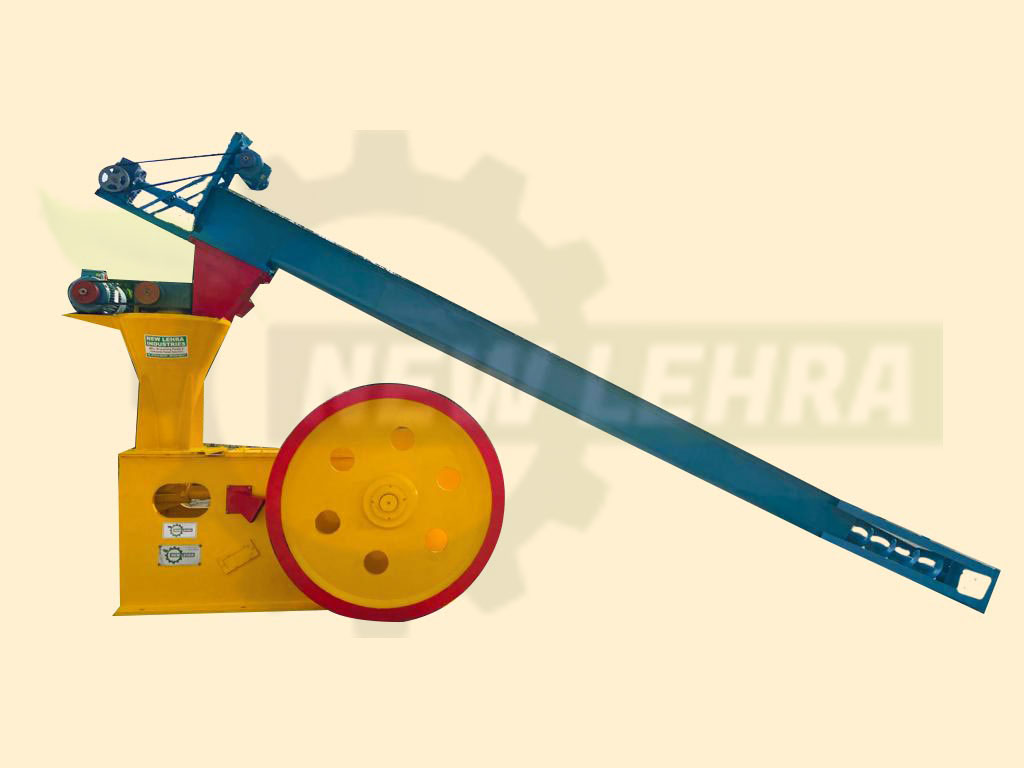
Also, pay attention to the ease of processing. It helps in determining the output quality and operational efficiency. It is especially important when investing in a biomass briquette machine (Punjab). Here, the local raw material conditions directly impact the performance.
Punjab offers a wide range of biomass options. However, not all materials behave the same during briquetting. Understanding the characteristics helps in selecting the right machinery. You can make the choice between a hammer mill machine and a sawdust making machine. It will ensure the smooth production.
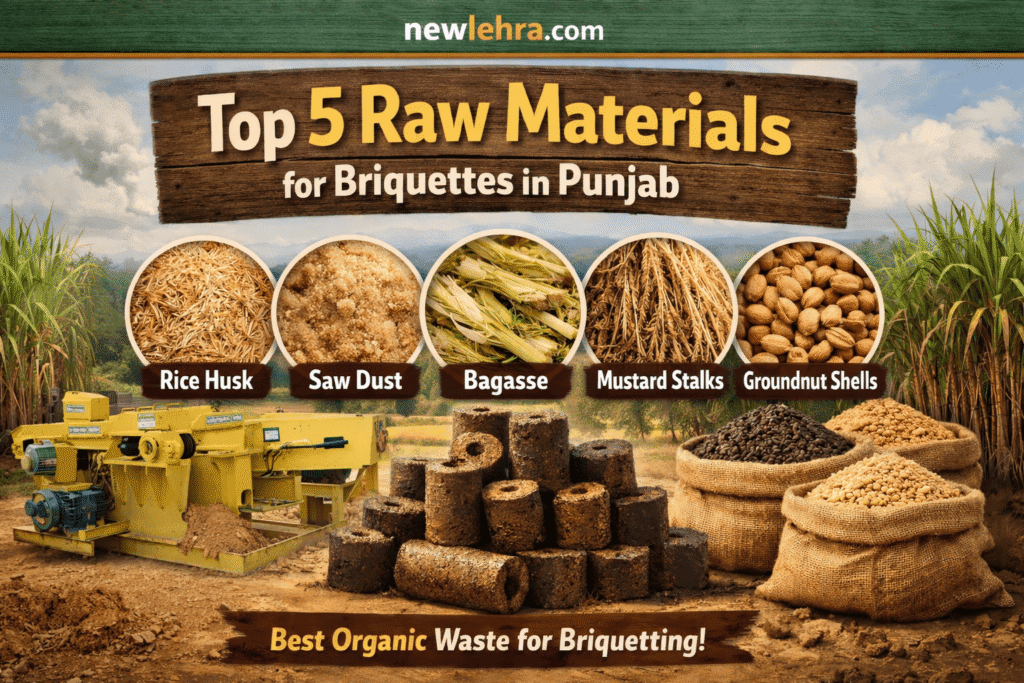
Raw material 1: paddy or rice husk – availability, moisture, processing tips
Paddy or rice husk is one of the most abundant biomass materials in Punjab. The state is known for being a major rice producer. Here, the rice mills generate massive quantities of husk as a byproduct.
- Availability
Rice husk is readily available throughout the year. It happens due to the continuous milling operations. This is thus one of the most reliable raw materials for briquetting. Point two, moisture content. Fresh rice husk contains moderate moisture. The moisture content is usually 10 to 15%. It is relatively manageable. However, during storage in humid conditions, the moisture levels usually rise.
- Processing tips
- Minimal grinding is important. The husk is small in size.
- Drying may be needed when the moisture exceeds the optimal levels.
- Uniform feeding improves the briquette density.
Rice husk works efficiently in a biomass briquette machine. It happens due to the consistent particle size and availability. Thus, it serves as the preferred choice for many manufacturers in Punjab.
Raw Material 2: Sawdust – Sources, Particle Size, and Drying Needs
Sawdust is another highly popular raw material. It helps in briquette production. It is widely generated from the furniture factories and sawmills. Also, the woodworking units produce those.
- Sources
Punjab has a strong furniture and timber industry. It ensures a steady supply of sawdust. Industrial clusters usually produce large volumes daily.
- Particle Size
Sawdust is already fine and uniform. It is ideal for briquetting. It does not require additional grinding. Rather, it reduces processing costs.
- Drying Needs
Fresh sawdust contains moisture levels between 30 to 50%. It is especially important when derived from green wood. Drying is essential for bringing the moisture down to around 8 to 12% for optimal briquetting. Usually, the sawdust is coarse or mixed with chips. Here, a sawdust-making machine or hammer mill machine will help achieve the desired consistency. The excellent binding properties and uniformity make sawdust incredible for high-density briquettes. They produce the briquettes with a good calorific value.
Raw material 3: mustard stalks – Seasonal availability, grinding required
Mustard stalks are a common agricultural residue in Punjab. It is especially available after the harvest season.
- Seasonal availability
Unlike the rice husk, mustard stalks are seasonal. They are available in large quantities after harvesting. However, they require proper storage for year-round use.
- Structure and composition
Mustard stalks are fibrous. They are relatively hard. This makes direct briquetting difficult without pre-processing.
- Grinding requirements
The material must be processed using a hammer mill machine. It breaks down into the smaller uniform particles. Proper grinding ensures better compaction and binding when it comes to briquetting.
- Moisture considerations
Mustard stalks usually have moderate moisture content. Drying is, however, still necessary depending on the storage conditions. Despite being seasonal, mustard stalks are a valuable addition to the list of biomass raw materials Punjab offers. It is especially helpful for the long-run, for long-term purposes when managed efficiently.
Raw material source: wood chips or timber waste – Cheaper grinder needed
Wood chips and timber waste come from sawmills. Also, they are produced from construction sites and furniture manufacturing units.
- Availability
Punjab’s wood processing industries generate a consistent supply of timber waste. It is a reliable raw material source.
- Size and structure
Wood chips are larger in size. They do not find direct use in a biomass briquette machine. They require size reduction before processing.
- Processing equipment
A chipper or hammer mill machine is necessary to convert the wood chips into small particles. They are suitable for briquetting.
- Moisture levels
Fresh wood chips usually have a high moisture content of around 40-60%. They require proper drying before use.
When processed, wood-based materials produce high-quality briquettes with excellent burning efficiency. Also, they guarantee durability.
Raw material 5: sugarcane bagasse – Moisture content challenges
Sugarcane bagasse is a by-product of sugar mills. It is widely available in regions with sugarcane cultivation.
- Availability
Punjab has several sugar mills. Bagasse is a readily available biomass resource. It is especially available during the crushing seasons.
- Moisture challenges
Bagasse typically has very high moisture content. It is usually more than 50%. It is thus important to consider drying as a critical step before briquetting.
- Processing requirements
Intensive drying is required. Proper feeding systems are necessary due to the fibrous nature. Grinding is important for uniformity. Despite the challenges, bagasse is an excellent raw material when properly processed. It produces briquettes with good calorific value. It also guarantees better combustion efficiency.
How to process each material – Drying, grinding, and briquetting machines needed
Different raw materials require different levels of pre-processing. Understanding such requirements ensures smooth operation. Also, it guarantees better output.
- Drying
Materials like bagasse and sawdust often require drying. Also, wood chips require drying for reduction of the moisture content. Rotary or flash dryers are important depending on the scale of operation.
- Grinding
Fibrous and bulky materials like the mustard stalks and wood chips need processing using a hammer mill machine. It helps achieve a uniform particle size.
- Size reduction
In cases where the raw materials are uneven or coarse, a sawdust making machine helps convert them into fine particles. They are suitable for briquetting.
- Briquetting
You can let the material dry and process and then feed it into a biomass briquette machine (Punjab). It produces compact high-density briquettes.
Proper coordination between drying, grinding, and briquetting ensures consistent production quality. It also reduces the machine wear and tear.
Efficient material handling and storage are equally important in the briquetting process. Raw materials should be stored in covered and well-ventilated areas. It will help prevent moisture absorption. It is especially important during Punjab’s monsoon season. Improper storage increases drying costs.
In addition, it reduces briquette quality. Additionally, consistent feeding mechanisms help maintain uniform flow into the biomass briquette machine. It also helps avoid blockage and uneven output. Pre-screening of the raw materials helps remove impurities.
It will strain out the stones or metal pieces. It is highly recommended. Otherwise, they can damage the equipment. Usually, with the presence of impurities, the hammer mill machines get damaged. Also, it may reduce the overall operational efficiency.
Which machine does New Lehra recommend for each raw material?
Choosing the right machinery for every type of raw material is essential. It guarantees maximizing efficiency and minimizing operational issues. For rice husk and sawdust, standard biomass briquette machine setups work efficiently. They are favorable due to the fine particle size and manageable moisture levels.
The materials require minimal pre-processing. They are cost-effective options. For the mustard stalks and wood chips, New Lehra recommends using a hammer mill machine. It helps achieve the required particle size before briquetting. It ensures better compaction and improved briquette quality.
For the high moisture materials like sugarcane bagasse, a drying system before briquetting is crucial. Proper drying ensures better binding. It also guarantees a higher calorific value in the final product.
The right machinery with the right raw material ensures that the business can significantly improve productivity. It also helps reduce the operational cost. Punjab is known today for its abundant agricultural and industrial biomass resources. Selecting suitable equipment serves as the key to building a successful briquetting operation.