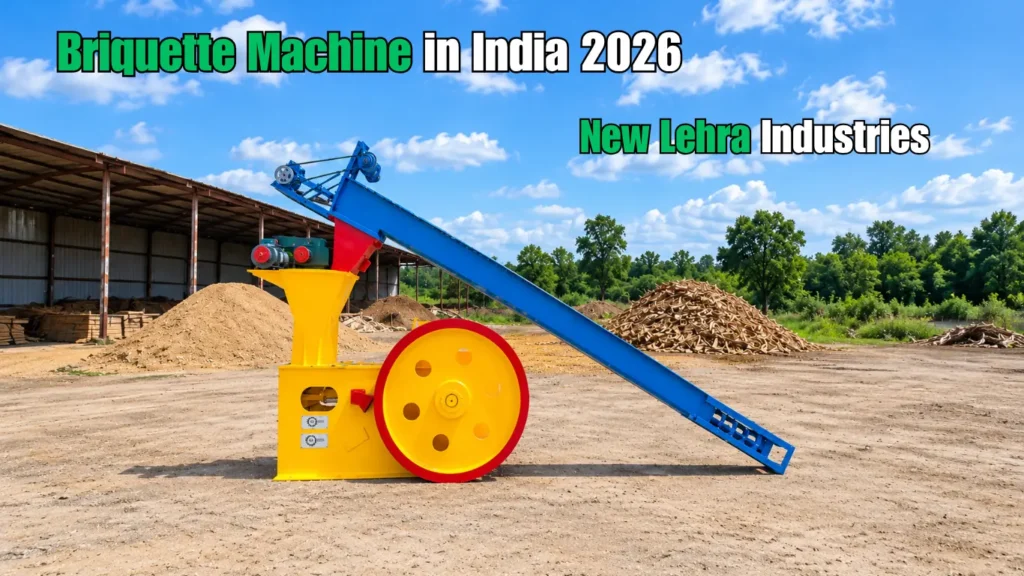
You have already moved past the preliminary question of “what is biomass densification.” You understand the urgent environmental mandate to replace fossil fuels, and you recognize the vast commercial potential of converting agricultural residues into high-density white coal. Now, you are facing a high-stakes capital expenditure decision. Selecting the right briquette machine in India is not an off-the-shelf procurement exercise; it is an integrated engineering decision that will dictate the operational viability, profitability, and longevity of your entire plant.
A briquetting press is a highly localized configuration. It must be meticulously engineered around your specific feedstock characteristics, your regional climatic variables, your site infrastructure, and your targeted output parameters. Buying a generic machine based on a brochure specification is the most common—and most penalizing—error made by new entrants in the agro-waste briquetting sector.
The purpose of this definitive guide is to lay out every technical, operational, and strategic factor you must resolve before issuing a manufacturing order. This framework is drawn directly from the institutional memory of New Lehra Industries. Since 1989, when our founder, Late Sr. Nahar Singh, pioneered indigenous densification technology, we have commissioned over 4,000 installations across more than 20 countries. In our three decades of commissioning plants across India, troubleshooting raw material variances, and supporting operators on the shop floor, we have learned exactly where projects succeed and where they fail.
Use this 15-point checklist to structure your procurement process, evaluate potential manufacturing partners, and ensure your investment is engineered for decades of relentless industrial operation.
1. Define Your Raw Material Reality First
The most fundamental law of biomass densification is that the feedstock dictates the machine, not the other way around. Buyers often approach a briquetting plant manufacturer with a desired output capacity in mind, completely overlooking the physical and chemical realities of the raw material they intend to process. Your feedstock is the undisputed baseline for every engineering decision that follows.
Feedstock Identification and Consistency
You must explicitly define whether your plant will operate on a single homogenous material, such as pure pine sawdust, or a heterogeneous mix of agricultural residues, such as a blend of rice husk, mustard husk, groundnut shells, and sugarcane bagasse. Mixed feedstocks present complex rheological challenges inside the compression chamber. Different materials possess varying degrees of natural lignin, varying ash contents, and different compression ratios. If you plan to change feedstocks seasonally based on harvest cycles, your machine must be engineered with adjustable pressure settings and versatile die configurations to accommodate these fluctuations without catastrophic jamming.
The Moisture Window
The thermodynamic physics of briquetting dictate a highly specific moisture tolerance. We explicitly state to all our clients that the ideal moisture content for binderless biomass briquetting sits tightly within the 8% to 12% window. If the moisture content falls below 8%, the biomass lacks the necessary water vapor to facilitate the glass transition of lignin, resulting in brittle, easily shattered briquettes. Conversely, if the moisture exceeds 12% to 15%, the excess water acts as an incompressible fluid within the die. When subjected to extreme pressure and heat, this moisture flashes into steam, causing the briquette to violently expand and burst as it exits the cooling line. Material above this threshold mandates the integration of a drying stage—such as a flash dryer or rotary drum dryer—which represents a distinct capital component and alters your entire upstream layout.
Particle Size and Granulation
A briquette press is a densification tool, not a crushing tool. For optimal compaction, the raw material must be reduced to a uniform particle size, typically below 5 mm. Some high-compression piston-press configurations require even finer granulation for seamless feeding. Attempting to feed oversized wood chips or long agricultural stalks directly into the hopper will lead to bridging, uneven bulk density, and rapid mechanical failure. You must evaluate the necessity of upstream size-reduction equipment, such as heavy-duty shredders, wood chippers, or hammer mill grinders, to achieve this non-negotiable particle threshold.
Bulk Density and Flowability
The volumetric feeding efficiency of your machine is entirely dependent on the bulk density of your raw material. Low-density materials, such as raw paddy straw or fluffy rice husk, behave very differently in a gravity-fed hopper compared to dense, granular sawdust. Materials with poor flowability tend to form “rat holes” or arches in the feed chute, starving the compression chamber and causing severe load fluctuations on the main motor. The feeding mechanism—whether a standard gravity chute, an active screw feeder, or a customized forced-feeding crammer—must be perfectly matched to the flow characteristics of your specific biomass.
Contamination Risks
Biomass sourced from open agricultural fields or timber yards is rarely pristine. It is frequently contaminated with abrasive elements like silica sand, gravel, field stones, and tramp metal (nails, wire, tractor parts). These contaminants are the natural enemies of precision-machined press components. Feeding stones or metal into a high-pressure die causes accelerated wear, severe scoring of the ram, and potentially catastrophic structural damage to the press frame. The inclusion of protective upstream auxiliaries, such as destoners and magnetic separators, is often a mandatory insurance policy for your core machinery.
Because feedstock is the ultimate variable, we do not expect buyers to guess these parameters. New Lehra Industries offers comprehensive raw material testing at our in-house R&D facility. We validate the briquetting feasibility, determine the exact moisture and density metrics, and configure the ideal die profile before a single piece of steel is cut for your machine.
2. Select the Right Briquetting Technology for Your Feedstock
Assuming all briquette presses function identically is a critical engineering oversight. Different press technologies are not simply interchangeable alternatives; each relies on a fundamentally distinct operating principle, yields a different output profile, and exhibits a strong preference for specific feedstock categories. Selecting the wrong technology for your material will result in chronic operational failure.
Piston Press (Ram Type)
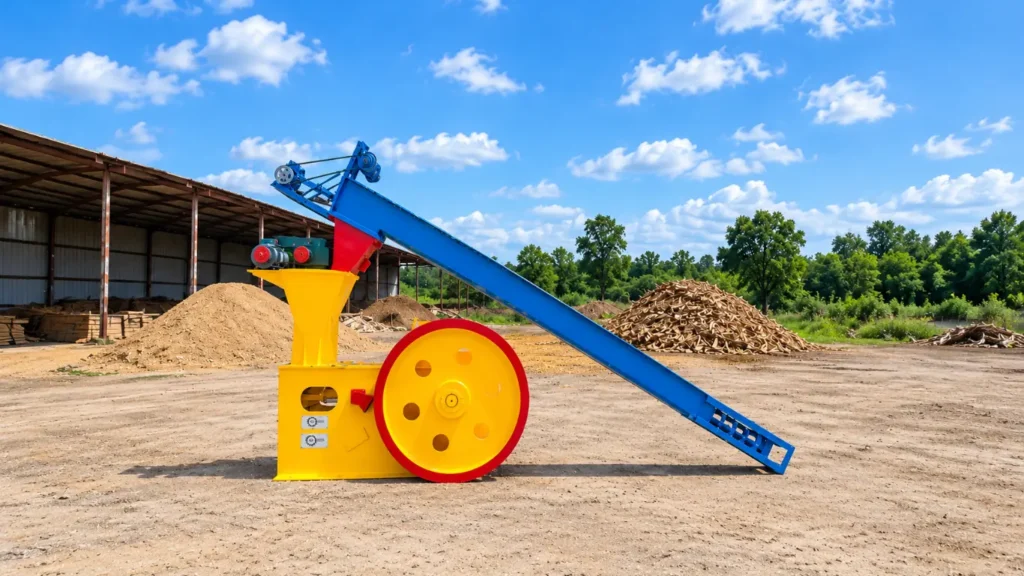
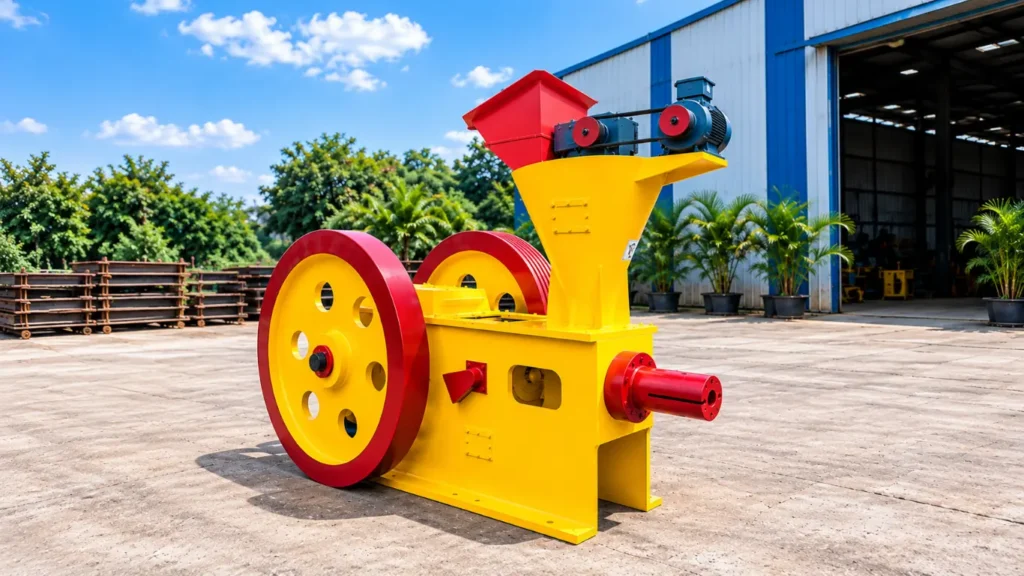
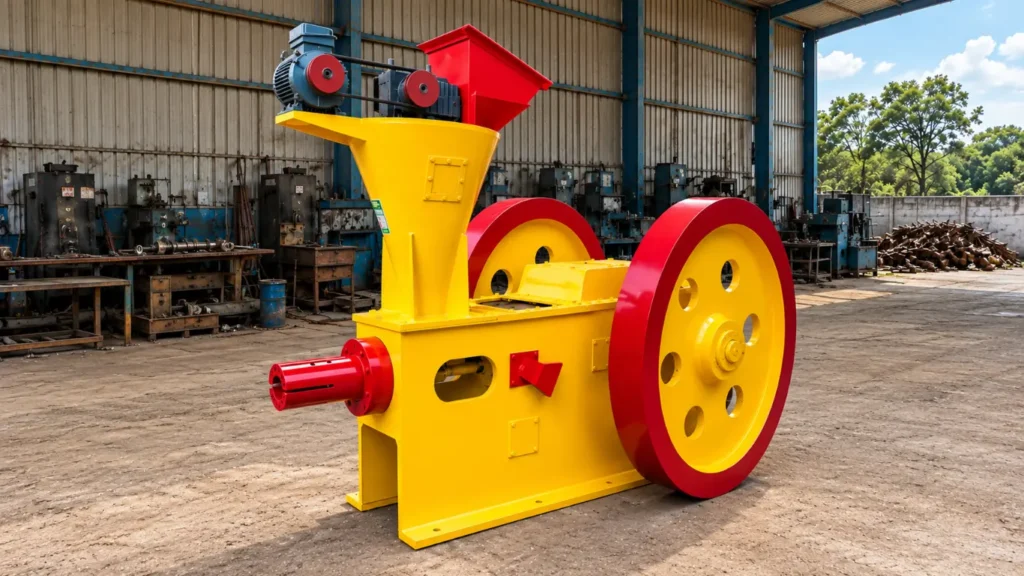
The mechanical piston press, or ram-type press, is the dominant and most battle-tested technology in India for high-capacity biomass briquetting. This machine operates via a heavy reciprocating ram driven by a massive flywheel and an eccentric shaft. With each stroke, the ram punches a new charge of biomass into a tapered die, generating immense pressure (often exceeding 1,000 kg/cm²) and significant frictional heat. This technology is prized for its high output capability, frequently exceeding 1,000 kg/hr, and its rugged suitability for abrasive woody biomass and tough agricultural residues. The vast majority of commercially successful installations across the subcontinent utilize this robust configuration.
Screw Press (Extruder Type)
The screw press operates on the principle of continuous extrusion. A heavy-duty auger forces the biomass through a heated die, building pressure gradually rather than via impact. While this technology produces a highly dense, often hollow-core briquette with excellent combustion characteristics, it is highly sensitive to abrasive wear. The screw flighting degrades rapidly when processing silica-rich agricultural residues like rice husk. Consequently, screw presses are more commonly deployed for specialized applications, such as processing charcoal dust, coal fines, or very specific, non-abrasive wood wastes. Furthermore, they often require external heating elements to activate the biomass lignin.
Hydraulic Press
A hydraulic press relies on a sophisticated hydraulic pump station and heavy-duty cylinders to generate extreme, sustained compression. This technology is highly controllable, allowing operators to fine-tune the exact compaction force via proportional overflow valves. While exceptionally versatile and capable of handling complex geometries, hydraulic presses are generally characterized by lower volumetric throughput compared to mechanical piston presses. They are typically reserved for niche materials that require extraordinary densification, or for processing industrial and metallic waste where impact presses are unsuitable.
Roller Press
Roller presses utilize two massive, counter-rotating rollers featuring pocketed surfaces. As material is fed between the rollers, it is squeezed into pillow-shaped or almond-shaped briquettes. This technology is the standard for processing mineral dusts, charcoal, and chemical powders, but it has severe limitations for raw fibrous biomass. Roller presses cannot generate the extreme, sustained pressure necessary to trigger the natural lignin bonding required for binderless agro-waste briquetting.
Binderless vs. Binder-Required
The physics of your chosen press dictates your binder strategy. High-pressure mechanical piston presses achieve true binderless briquetting by exploiting the natural lignin inherent in plant matter. The immense pressure and resultant frictional heat plasticize this lignin, turning it into a natural, internal glue. Lower-pressure systems, or technologies like roller presses, lack this capability and therefore mandate the continuous addition of external chemical binders. Your choice of technology irrevocably determines your ongoing operating complexity.
3. Match Production Capacity to Your Real Market Demand
Capitalizing a project based on idealized, theoretical output figures is a guaranteed path to compromised unit economics. Buyers frequently succumb to the temptation of over-specifying their plant capacity based on optimistic, long-term sales projections. When the reality of supply chain logistics sets in, they find themselves operating a massive plant at 30% utilization, destroying their profit margins through unabsorbed fixed costs.
Nameplate vs. Achievable Capacity
It is imperative to understand that production capacity in biomass densification is not a static, guaranteed metric. The “nameplate” capacity printed on a manufacturer’s brochure represents the theoretical maximum under perfect laboratory conditions using ideal, high-density sawdust. In the real world, achievable capacity is a dynamic function of your specific feedstock’s bulk density, moisture content, particle geometry, and ambient operating conditions. A heavy-duty press rated for 1,500 kg/hr on dense hardwood dust may only deliver 1,000 to 1,200 kg/hr when processing a fluffy, low-density material like paddy straw or cotton stalks. You must demand capacity guarantees based on your specific raw material.
Capacity Ranges in the Indian Market
To provide a factual, non-promotional baseline, commercial briquetting presses in India span a broad operational spectrum. Entry-level units designed for localized, small-scale waste utilization may offer capacities in the sub-500 kg/hr range. Mid-tier commercial plants typically target 750 kg/hr to 1,000 kg/hr. Heavy industrial configurations, designed for continuous, multi-shift operations supplying large-scale power plants, can exceed 2,000 kg/hr per press. Your selection must align with a rigorous, conservative business plan.
The Cost of Idle Capacity
An oversized, underutilized machine is a severe financial liability. A massive mechanical press requires a correspondingly massive main drive motor. When running at partial capacity, the power consumption per tonne of finished product skyrockets. Furthermore, specialized labor, wear-part degradation, and maintenance overheads continue to accrue regardless of your throughput. You must rigorously map your selected machine capacity to confirmed, ironclad offtake agreements or a highly realistic, localized market ramp-up curve.
Future-Proofing vs. Overcapitalization
Rather than overcapitalizing on day one with a single, massive 2,000 kg/hr unit that you cannot feed, we strongly advise buyers to embrace modular expansion. The most successful operators start with a right-sized, highly efficient 1,000 kg/hr unit. Once their raw material supply chains are stabilized and their buyer network is solidified, they simply add a second identical press in parallel. This approach provides operational redundancy (if one machine is down for die maintenance, the plant still produces) and optimizes power consumption during seasonal demand fluctuations.
4. Power Availability and Electrical Infrastructure: The Silent Bottleneck
Briquetting is a profoundly power-intensive industrial process. Overcoming the immense resistance of pushing dry biomass through a restrictive steel die requires massive torque and continuous, stable electrical energy. Grid readiness is a binary, go/no-go factor that enthusiastic buyers often discover far too late in the project lifecycle, leading to stranded assets and severe commissioning delays.
Connected Load Requirements
You must intimately understand the sheer scale of the electrical demand. A standard, mid-capacity 750 kg/hr briquetting unit—when accounting for the main press motor, the feeding systems, and basic conveyors—may require a connected electrical load in the range of 35 to 40 kW. Scaling up to larger 90 mm die machines built for industrial output can push the connected load demand to 91 HP or significantly higher, especially when upstream hammer mills and drying systems are factored into the line. You must formally confirm that your state electricity board can sanction this specific industrial load at your targeted site before you finalize the machinery order.
Three-Phase Supply and Voltage Stability
Industrial briquetting presses absolutely require a robust, uninterrupted 3-phase industrial power supply (typically 415V/50Hz in India). Furthermore, the quality of that power is just as critical as its availability. The massive flywheels on piston presses create immense inductive loads and significant starting current spikes. Rural or semi-urban industrial feeders in India are notoriously prone to severe voltage fluctuations, phase imbalances, and brownouts. Operating a heavy-duty press under low-voltage conditions will rapidly overheat and destroy expensive main drive motors and fry sensitive electrical control panels. The installation of heavy-duty stabilizers, servo-controlled voltage regulators, and capacitor banks for power factor correction are often non-negotiable infrastructure investments.
Power Quality and Tariff Structure
Industrial electricity tariffs vary wildly across different Indian states and even between specific industrial zones within the same state. Because electrical power is consistently one of the largest variable operating expenses in a briquetting plant, you must meticulously model your energy cost per tonne of briquettes produced. Understanding peak vs. off-peak tariff structures and maintaining a power factor close to unity to avoid grid penalties are critical for safeguarding your operational margins.
Captive Power Options
In regions where grid supply is chronically unreliable or subject to scheduled daily load shedding, you must rigorously evaluate captive power alternatives. While running a high-horsepower briquette press entirely on diesel generator backup is rarely economically viable for continuous production, having sufficient DG capacity to safely clear the machine during a blackout is crucial. For highly capitalized, large-scale plants, integrating captive solar or wind hybrid systems is becoming an increasingly relevant planning consideration to offset long-term grid dependency.
5. The Complete Upstream and Downstream Plant Configuration
A common fallacy among new entrants is fixating entirely on the press itself. A briquette machine alone does not make a functional plant; you are commissioning an integrated, continuous production line. Neglecting the auxiliary material handling and preparation equipment guarantees chronic bottlenecks, uneven briquette quality, and devastating downtime.
Upstream Equipment Checklist
The preparation of the biomass before it enters the press represents 80% of the battle. Your upstream configuration must be engineered to deliver a flawless, continuous feed of correctly sized, correctly dried material.
- Chipper/Shredder: If your raw material consists of bulky forestry waste, large wood logs, or long agricultural stalks, you must deploy heavy-duty chippers to perform the primary size reduction, transforming massive volumes into manageable chips.
- Hammer Mill Grinder: The chips must then be aggressively pulverized by a high-speed hammer mill to achieve the fine, uniform powder (under 5 mm) demanded by the press. The screen size of the hammer mill directly dictates the final particle geometry.
- Dryer (Flash or Rotary Drum): If your biomass holds ambient moisture levels of 25% to 50%, an industrial drying system is mandatory. Flash dryers utilize a stream of hot air to quickly dry fine particles, while massive rotary drum dryers are deployed for high-volume, continuous moisture reduction to hit that critical 8–12% window.
- Destoner and Magnetic Separator: To protect the expensive press components, you must integrate pneumatic destoners to drop out heavy silica/sand and heavy-duty magnetic plates to pull tramp iron out of the material stream.
- Conveying System: The arteries of your plant. Relying on manual labor to move tonnes of material between machines is inefficient and dangerous. You must specify appropriate bucket elevators, enclosed screw conveyors, and heavy-duty belt conveyors to automate the material flow.
Downstream Equipment
Once the briquette is formed, it is highly vulnerable and must be handled with specialized downstream systems.
- Cooling Conveyor: Freshly extruded briquettes emerge from the die at extremely high temperatures due to internal friction. At this stage, they are soft and highly fragile. They must travel along an extended, ventilated cooling conveyor track, allowing them to gently cool, off-gas steam, and cure into their final, rigid state before handling.
- Packaging/Bagging System: Depending on your end-user requirements, you must engineer a system for automated bagging into standardized industrial sacks or bulk loading directly into transport vehicles.
The “Weakest Link” Principle
We emphasize to all our clients that a production line is only as fast as its slowest component. The impressive 1,500 kg/hr capacity of your press is completely irrelevant if your hammer mill can only grind 800 kg/hr, or if your dryer becomes overwhelmed by high-moisture monsoon feedstock. The entire line must be holistically balanced, with upstream equipment ideally oversized by 15% to 20% to ensure the press is never starved of material.
6. Die, Ram, and Wear-Part Lifecycle Management
This is the operational arena where the economics of biomass densification are either won or lost. A buyer who does not meticulously plan for wear-part degradation is planning for catastrophic, unplanned downtime. The intense friction generated by compressing abrasive agricultural waste will inevitably consume the contact steel; your goal is to manage and predict this consumption.
Die and Ram Wear
In a mechanical piston press, the die (the tapered cylinder that shapes the briquette) and the ram (the piston that punches the material) are the highest-wear components. Their operational lifespan is a complex calculus dependent on the abrasiveness of your specific feedstock, the operating pressure settings, and the rigor of your maintenance discipline. We provide our clients with qualitative lifespan ranges—typically spanning several hundred to over a thousand hours—rather than fixed, unrealistic guarantees. We ensure buyers understand that processing highly abrasive, silica-heavy feedstocks like rice husk will exponentially accelerate wear compared to processing clean sawdust. Understanding the metallurgy—such as the use of specialized EN-series steels and precise case-hardening techniques—is vital.
Lubrication Regime
The immense kinetic energy of a briquetting press relies on heavy-duty bearings, eccentric shafts, and massive bronze bushes. Modern presses utilize sophisticated forced or centralized lubrication systems to maintain a continuous film of oil and grease under extreme load. The buyer must deeply understand the daily, weekly, and monthly lubrication checklists, the specific viscosity grades required, and the operational cost of these industrial lubricants. Failure to adhere to the lubrication regime will result in bearing seizure and catastrophic shaft failure.
Spare Parts Availability
This is an absolute, non-negotiable manufacturer-selection criterion. When evaluating suppliers, you must ask hard questions: Are the dies, rams, and heavy castings manufactured and stocked domestically? What is the guaranteed lead time for an emergency replacement die? Purchasing an imported machine from a vendor without a deep, localized spare-part inventory is a fatal error. When a die cracks during peak season, a machine waiting weeks for an imported spare part becomes a massive, useless paperweight, obliterating your cash flow.
New Lehra Integration Point
We position our 30+ year domestic manufacturing base as your ultimate risk mitigant against spare-part delays. When you operate New Lehra’s Biomass Briquette Machine Range you are backed by an indigenous supply chain. We machine our own dies, forge our own rams, and maintain the critical inventory required to keep your plant running when wear inevitably occurs.
7. Binder Strategy: Natural Lignin vs. Additives
The term “binderless” is one of the most powerful and misunderstood concepts in the industry. As a buyer, you must possess a rigorous technical understanding of when true binderless briquetting is thermodynamically possible, and when external additives become an unavoidable operational reality.
How Natural Lignin Works
Plant biomass is essentially a composite material made of cellulose fibers bound together by a complex organic polymer called lignin. Under the extreme pressure (often >1000 bar) and the subsequent friction-generated heat (rising to 150°C – 200°C) achieved inside a heavy-duty mechanical piston press, this lignin undergoes a phase change. It softens, plasticizes, and acts as a potent internal adhesive. As the briquette exits the die and cools, the lignin solidifies, locking the cellulose fibers into a dense, highly durable state. This is the precise mechanism that allows high-pressure presses to produce premium white coal without a single drop of added chemical.
When Binders Are Needed
Not all machines and not all materials can exploit natural lignin. Lower-pressure technologies, such as screw presses or roller presses, often cannot generate the requisite heat and force to trigger this phase change. Furthermore, if you are attempting to densify carbonized materials (charcoal dust) where the lignin has already been destroyed by pyrolysis, or materials with extremely high ash content and low natural lignin, external binders become mandatory. Common industrial binders include starch, molasses, specialized clays, or synthetic resins.
Cost and Operational Implications of Binders
If your technology or feedstock dictates the use of binders, you are fundamentally altering your business model. You must now plan for additional capital expenditure (industrial mixers, dosing pumps), increased labor overheads, the complex logistics of ongoing binder procurement, and the potential negative impact on the final briquette’s combustion profile (certain binders increase ash content or reduce gross calorific value).
Testing Is Non-Negotiable
You cannot guess your binder strategy. We strongly recommend that every prospective buyer send a representative, bulk sample of their intended feedstock to the manufacturer for empirical trial briquetting. This is a standard protocol at New Lehra Industries; we run your material through our test rigs to scientifically determine whether true binderless operation is achievable, or if specific conditioning is required.
8. Site Readiness, Space Planning, and Civil Works
A common, expensive mistake is assuming a briquette machine can be dropped into an existing shed without extensive architectural and structural planning. The machine must dictate the site design, not the other way around. Space planning errors lead to cramped, dangerous work environments and highly expensive concrete retrofits.
Machine Room Dimensions
The core production area must be remarkably spacious to accommodate the press, the extensive cooling lines, and safe operational clearances for maintenance personnel. Industry benchmarks suggest that a single-machine room utilizing a standard configuration may require a footprint of approximately 25 ft × 70 ft. If you are planning for modular expansion, a two-machine parallel layout may necessitate an unobstructed space of 35 ft × 70 ft. Cramping the machine room restricts airflow and makes routine die changes incredibly difficult and hazardous.
Total Land Requirement
The machine room is only a fraction of the total footprint. A complete, commercially viable briquetting facility—incorporating vast raw material storage yards, potential outdoor sun-drying areas, finished goods warehousing, and maneuvering space for heavy transport trucks—may require a minimum total land area of 4,000 to 4,500 sq. ft., with larger industrial operations requiring upwards of an acre.
Foundation and Floor Loading
Briquetting presses are massive, reciprocating machines that generate severe dynamic loads, powerful harmonic vibrations, and intense impact forces. Placing a 5-tonne press on a standard industrial floor will quickly shatter the concrete. The civil foundation must be rigorously engineered to the exact specifications of the manufacturer’s foundational drawings, utilizing high-grade reinforced concrete, extended curing times, and specialized anti-vibration isolation pads to absorb the kinetic shockwaves.
Raw Material Storage
Biomass is inherently bulky, highly compressible, and subject to severe seasonal availability. To buffer against supply chain disruptions, transport strikes, and the catastrophic moisture ingress of the Indian monsoon season, you must construct extensive, weather-proof, covered storage capacity. Best practices dictate maintaining a minimum buffer stock of 15 to 30 days of raw material.
Ventilation, Dust, and Fire Safety
The process of grinding and pressing dry biomass generates vast quantities of highly combustible fine dust. Without proper mitigation, this environment mimics the conditions of a localized ATEX explosive zone. Comprehensive site planning must mandate heavy-duty industrial ventilation, cyclonic dust collection systems over the hammer mills, spark detection protocols, fire-rated electrical enclosures, and strategically placed fire suppression infrastructure. These are non-negotiable safety mandates, not optional accessories.
9. The Regulatory and Subsidy Landscape for a Briquette Machine in India
The macroeconomic policy environment in India aggressively supports renewable energy and biomass densification. The transition away from high-polluting fossil fuels in industrial boilers is a national imperative. A buyer who does not meticulously map the bureaucratic and subsidy pathway is leaving highly legitimate, project-making capital on the table.
MNRE Central Financial Assistance
The Ministry of New and Renewable Energy (MNRE) actively champions the sector through the National Bioenergy Programme. Under this framework, new biomass briquette manufacturing plants are frequently eligible for substantial Central Financial Assistance (CFA). While policies evolve, the indicative benchmark for such support is often cited at ₹9 lakh per MTPH (metric tonne per hour) of installed manufacturing capacity, subject to a maximum overall CFA cap of ₹45 lakh per plant. Navigating this application process requires rigorous project documentation and adherence to technical standards.
PMEGP and MSME Schemes
For new entrepreneurial ventures and Micro, Small, and Medium Enterprises (MSMEs), the Prime Minister’s Employment Generation Programme (PMEGP) offers highly attractive credit-linked subsidy schemes. Depending on the demographic category of the applicant and the location of the unit (urban vs. rural), new manufacturing units with project costs up to defined thresholds may qualify for substantial non-repayable margin money subsidies (e.g., 15% to 35%), radically improving the initial project feasibility.
IREDA Financing
The Indian Renewable Energy Development Agency (IREDA) acts as the premier financial institution for the sector, providing specialized, concessional term loans for biomass projects. Selecting equipment from a recognized, vetted manufacturer significantly streamlines this complex financial hurdle. Reviewing the company’s IREDA-approved manufacturing credentials provides banks and nodal agencies with the institutional confidence required to accelerate loan appraisals and disburse funds.
State-Level Incentives
Beyond central schemes, numerous progressive state governments offer a cascading tier of localized industrial incentives specifically tailored for agro-waste processing units. These can include capital investment subsidies, long-term electricity duty exemptions, heavily subsidized land allotments in designated industrial parks, and state GST reimbursements. You must engage a local industrial consultant to map these state-specific benefits.
Compliance Checklist
Before breaking ground, the buyer must execute a rigid compliance checklist. This includes obtaining the foundational Udyam registration, securing mandatory Consent to Establish (CTE) and Consent to Operate (CTO) from the State Pollution Control Board, and acquiring the necessary factory licenses. Depending on the scale of your operation and its proximity to ecological zones, specific environmental clearances may also be mandated.
10. Total Cost of Ownership: The Variables That Matter (Without Quoting Prices)
The most destructive mistake a buyer can make is evaluating a project based solely on the initial capital expenditure of the core machine. A briquetting plant is a long-term industrial asset. You must construct a rigorous financial model based on the Total Cost of Ownership (TCO) projected over a 5 to 7-year operational horizon.
The TCO Framework
Your comprehensive TCO model must aggregate several dynamic variables:
- Capital Expenditure: The foundational investment encompassing the core press, all upstream/downstream auxiliaries, the engineered civil foundation, heavy electrical infrastructure, and professional installation.
- Energy Cost per Tonne: Because of the massive connected load, electrical consumption is invariably the largest variable operating expense. The efficiency of your machine directly dictates this metric.
- Wear-Part Replacement Lifecycle: The predictable frequency and procurement expense of replacing consumable dies, rams, and heavy-duty bushes.
- Labor Overheads: The ongoing expenses related to skilled machine operators, maintenance technicians, and the manual labor required for complex material handling and bagging operations.
- Raw Material and Logistics: The landed cost of your feedstock, incorporating seasonal price fluctuations, transport logistics, and storage losses.
- Financing Constraints: The burden of debt servicing, interest accruals, and the tenure of your capital loans.
The Revenue Side
Profitability is achieved when the TCO is eclipsed by optimized revenue generation. Your revenue is entirely dependent on the final selling value of your briquettes (which is governed by their gross calorific value, structural density, and ash profile), the strength of your industrial offtake contracts, and, crucially, your sustained capacity utilization rate. Operating a highly efficient machine continuously across multiple shifts maximizes revenue while diluting fixed costs.
Payback Sensitivity
We counsel our clients to frame their Return on Investment (ROI) and project payback as a highly sensitive, dynamic range, rather than a guaranteed, static timeline. While extensive industry literature often cites payback periods in the range of 2 to 5 years for well-capitalized, efficiently run projects, this outcome is hyper-sensitive to localized variables. A sudden spike in local raw material logistics or an unexpected drop in grid stability can alter this trajectory significantly.
The “Cheapest Machine” Trap
We must explicitly warn buyers against the dangerous allure of selecting a manufacturer based solely on the lowest initial capital quote. In heavy industrial engineering, aggressive discounting is invariably achieved by compromising structural integrity. A superficially cheaper machine will inevitably feature inferior, thinner metallurgical dies, dangerously undersized motors, hollow frame castings, and an absolute lack of localized after-sales support. The marginal savings achieved on day one will be entirely obliterated by chronic breakdowns, massive energy inefficiencies, and catastrophic wear-part failures, resulting in a disastrously high Total Cost of Ownership.
11. Manufacturer Evaluation: The Due-Diligence Checklist
Your relationship with a briquetting machine manufacturer is not a transactional vendor purchase; it is a long-term, highly interdependent industrial partnership. You are trusting them with the operational heartbeat of your enterprise. You must conduct rigorous, uncompromising due diligence to ensure they possess the institutional gravity required to support your ambitions.
Years in Operation and Institutional Memory
A manufacturer that has survived and thrived through multiple decades of raw material cycles, shifting government policies, and complex technological evolutions possesses an irreplaceable asset: institutional memory. They have already made, and solved, the engineering mistakes that new manufacturers are currently making. New Lehra Industries’ unbroken journey since 1989 serves as a definitive case study in this type of manufacturing durability and deep-domain expertise.
Certifications and Approvals
Do not accept verbal assurances of quality. Demand objective, third-party validation. An ISO 9001:2015 certification demonstrates a formalized, auditable commitment to quality management systems. CE certification on export models proves adherence to rigorous international safety and operational directives. Crucially, approval by national nodal agencies like IREDA serves as a profound validator of both technical competence and financial credibility.
Installation Base and References
A manufacturer is only as good as their operational track record in the field. Demand to know the total number of installed machines. More importantly, require them to provide active, verifiable references from existing buyers who are processing your exact feedstock in a similar geographical and climatic zone. A manufacturer claiming to be an industry leader must be able to point to a massive, successful installation base. New Lehra’s footprint of over 4,000 installations across more than 20 countries provides this undeniable reference pool.
In-House Manufacturing vs. Assembly
You must physically inspect the manufacturer’s facility to ascertain their true capabilities. Do they possess heavy CNC machining centers, boring machines, and heat-treatment furnaces to fabricate critical components (dies, rams, heavy frames) entirely in-house? Or are they merely a low-value assembly workshop bolting together imported, generic kits? In-house fabrication guarantees uncompromising metallurgical quality control and ensures rapid, localized spare-part turnaround during emergencies.
R&D and Raw Material Testing
A manufacturer who is willing to sell you a heavy industrial press without first analyzing your specific biomass is not demonstrating engineering seriousness; they are merely pushing inventory. Exceptional manufacturers maintain dedicated, in-house R&D units designed to physically test your raw material, analyze its rheology, and customize the die profile before finalizing the contract. This empirical approach mitigates massive downstream risk.
After-Sales Service Infrastructure
The true test of a manufacturer occurs when the machine inevitably breaks down during peak production season. You must interrogate their service infrastructure: How many dedicated, factory-trained service engineers are on staff? What is the guaranteed response time to a breakdown call? Do they operate a comprehensive, toll-free technical helpline? Will they deploy engineers to your site to conduct exhaustive operator training?
Warranty and Performance Guarantee
Examine the warranty documentation with extreme prejudice. Clarify exactly what components are covered under the warranty period and distinguish between parts replacement and labor coverage. Furthermore, evaluate whether the manufacturer is confident enough in their engineering to offer a performance guarantee explicitly tied to achieving the agreed-upon output capacity and briquette quality metrics.
12. Operator Training, Safety, and Manpower Planning
A state-of-the-art briquetting plant is only as effective as the human team managing it. Complex machinery cannot overcome incompetent operation. The responsibility for technology transfer and comprehensive operational education rests firmly on the shoulders of the manufacturer.
Operator Training
The manufacturer must be contractually obligated to provide highly structured, exhaustive training. This curriculum must cover precise startup and shutdown sequences (to avoid die jamming), continuous moisture monitoring protocols, the nuanced mechanical adjustment of die gaps to control pressure, rigorous daily lubrication schedules, and proactive, first-line troubleshooting. Ask the manufacturer whether this critical training is conducted theoretically at their factory or practically on-site during the intense commissioning phase on your specific material.
Safety Protocols
Briquetting is an inherently hazardous industrial process involving massive rotational kinetic energy, extreme hydraulic/mechanical pressure, hot metallic surfaces generated by severe friction, and highly combustible ambient biomass dust. The facility must mandate strict adherence to lockout-tagout (LOTO) procedures during maintenance, rigorous nip-guard compliance on all belts and pulleys, thermal protection barriers, and comprehensive dust explosion prevention measures. Safety is not a secondary consideration; it is the foundation of continuous operation.
Manpower Structure
You must budget for a specialized, dedicated workforce. A typical commercial plant requires a highly trained lead machine operator to monitor the press, multiple helpers to manage the heavy manual labor of material feeding and finished goods handling, a dedicated maintenance technician (or access to a shared industrial mechanic) to oversee lubrication and wear parts, and a plant supervisor to manage overall quality control, safety compliance, and dispatch logistics.
Documentation
A serious industrial manufacturer does not hand over a machine with a generic brochure. They supply comprehensive, detailed engineering documentation. This must include a highly specific Operation and Maintenance (O&M) manual, a granular spare-parts catalogue complete with exploded diagrams and precise part numbers for easy ordering, and complete electrical and hydraulic schematic drawings for your site technicians. Never accept delivery of a machine without this vital intellectual property.
13. Briquette Quality Parameters and Offtake Alignment
The ultimate objective of this entire capital exercise is not simply to operate a machine; it is to produce a highly specific, standardized fuel product that the market will readily purchase. Your machine must be configured to produce a briquette that your specific buyers demand, not merely a briquette that the machine finds easy to extrude.
Density and Mechanical Durability
High-quality briquettes must exhibit exceptional structural density (typically ranging from 0.8 to 1.4 g/cm³, heavily dependent on the inherent specific gravity of the feedstock). Furthermore, they must possess extreme mechanical durability to survive the brutal realities of bulk loading, long-distance truck transport, and rough unloading at the buyer’s site. Briquettes that shatter into useless dust during transit will be rejected by industrial buyers, destroying your reputation.
Calorific Value and Ash Content
It is vital to understand that the machine is a physical densifier, not a chemical transformer. The press cannot alter the fundamental chemistry of your raw material. The Gross Calorific Value (GCV) and the resulting ash content of your briquettes are entirely inherited from the feedstock. If you feed the machine with high-ash, low-energy paddy straw, you will produce high-ash, low-energy briquettes. You must deeply understand the thermal requirements of your target buyers (e.g., fluid bed boilers vs. grate boilers) and ensure your feedstock chemistry aligns with their specifications.
Briquette Size and Shape
The physical geometry of the briquette must match the combustion equipment of your end-user. A massive, 90 mm solid briquette may be the ideal fuel for a large-scale brick kiln or a heavy industrial boiler, but it may be entirely unsuitable for a small, localized gasifier unit that requires smaller, faster-burning fuel. High-end machines are engineered to accommodate varying die sizes, typically from 40 mm up to 100 mm, allowing you to pivot your product geometry to align exactly with shifting market requirements.
The Offtake Agreement
Before you authorize the final manufacturing of your machine, you must have secured your downstream revenue. Proceeding without a Letter of Intent (LOI) or a legally binding, long-term offtake arrangement with at least one major industrial buyer (such as a textile mill boiler operator, a massive brick kiln, or a dedicated biomass power plant) is a recipe for financial disaster. Producing thousands of tonnes of high-density briquettes without a secured buyer leads to massive inventory pileups and immediate cash-flow insolvency.
14. Commissioning, Performance Testing, and Handover
The procurement journey does not end when the truck carrying your machinery arrives at your facility. The purchase is only complete when the machine is successfully integrated into your site, is running continuously, and is demonstrably performing to the agreed-upon technical specifications utilizing your actual feedstock.
Site Inspection Before Dispatch
A responsible manufacturer does not ship heavy machinery blindly. They should proactively dispatch an engineer (or utilize detailed video conferencing) to verify your site readiness before the machine leaves their factory. They must confirm that your civil foundation has cured properly, that the heavy electrical supply is terminated correctly, and that your material handling infrastructure is in place. Shipping a machine to an unready site results in equipment degrading under tarpaulins while civil work is completed.
Commissioning Protocol
The manufacturer must deploy a seasoned commissioning engineer to your site to supervise the final mechanical erection, oversee the complex electrical panel connections, and ensure perfect alignment of the heavy drive components. The protocol mandates extensive “no-load” trials to verify motor directions and bearing temperatures, followed by highly controlled, progressive load trials utilizing your actual raw material.
Performance Test
The ultimate validation of your investment is the rigorous Site Acceptance Test (SAT). The machine must be operated continuously under full load for a defined, sustained period (e.g., an unbroken 8 to 24-hour run). During this critical window, the manufacturer must prove that the machine delivers the agreed-upon volumetric output, achieves the targeted briquette density, and maintains power consumption within the specified tolerances, without overheating or jamming.
Handover Documentation
Upon the successful conclusion of the performance test, the formal handover occurs. The buyer must receive a fully signed and counter-signed commissioning report detailing the performance metrics achieved, a comprehensive list of recommended emergency spares to stock immediately, and the direct contact details for the regional service and support network.
15. The New Lehra Advantage: Why Experience Matters in a Configuration-Driven Purchase
When you evaluate the preceding 14 factors, it becomes abundantly clear that buying a briquetting press is an exercise in complex system integration. You are balancing moisture thermodynamics, extreme mechanical friction, localized electrical constraints, and volatile biomass supply chains. Navigating these interdependent variables requires a manufacturing partner with profound, battle-tested experience.
Legacy Since 1989
New Lehra Industries does not rely on borrowed technology or assembled kits. Our authority is derived from our foundational history. Since Late Sr. Nahar Singh engineered one of India’s first indigenous briquetting machines in 1989, we have survived every market fluctuation, policy shift, and technological evolution in the Indian renewable sector. We have successfully delivered over 4,000 machines and executed upwards of 1,000 complete turnkey projects domestically and globally.
Complete Turnkey Capability
We eliminate the devastating “blame game” that plagues multi-vendor installations. New Lehra is not just a press supplier; we are a comprehensive plant integrator. We design, manufacture, and seamlessly integrate the entire production line: heavy-duty chippers, precision hammer mills, massive rotary dryers, the core briquette presses, extensive cooling conveyors, and final packaging systems. Because we control the entire manufacturing ecosystem, we ensure flawless upstream and downstream synchronization.
Binderless Technology Leadership
Our heavy-duty mechanical piston presses are engineered from the ground up to maximize the extreme compression required to exploit natural lignin. Our relentless engineering focus on true binderless briquetting radically simplifies your operational complexity, eliminates ongoing chemical additive expenses, and protects your long-term operating margins.
Dual-Purpose Innovation
We recognize that markets evolve. To provide our clients with maximum commercial flexibility, we pioneered the innovative briquette cum pellet machine. This advanced, dual-purpose configuration allows a single production line to seamlessly switch between producing large industrial briquettes and smaller, high-density biomass pellets, ensuring you can cater to both heavy industrial boilers and specialized commercial heating markets without redundant capital investments.
Service and Support
Our commitment extends far beyond the factory floor. Our machinery is backed by a massive domestic inventory of precision-machined spare parts, a network of highly certified deployment technicians, and the institutional credibility of being a recognized, IREDA-approved equipment supplier. We build machines designed to run relentlessly for decades.
A Consultative Close
Do not make a high-stakes capital decision based on a brochure. Before you finalize your machine specification, plant layout, or capacity requirements, let our engineering team test your feedstock, analyze your site constraints, and model the precise operating parameters required for your success.
Conclusion
The journey to commissioning a highly profitable, continuous-operation biomass plant is complex. The 15 critical factors outlined in this guide are not isolated checkboxes; they are deeply interdependent variables. A decision regarding your feedstock capacity directly dictates your heavy electrical requirements, which in turn dictates your civil site layout, ultimately defining your Total Cost of Ownership and project viability.
Navigating this matrix requires more than a machinery vendor; it requires an engineering partner. When evaluating a briquette machine in India, you are evaluating a highly customized configuration engineered to conquer the unique realities of your agricultural supply chain. New Lehra Industries has spent over three decades structuring our in-house R&D, heavy manufacturing, and dedicated service operations to guide serious industrial buyers through every single one of these pivotal decision points.
Your feedstock holds immense commercial energy. We possess the technology to unlock it. Contact the engineering team at New Lehra Industries today to schedule a comprehensive technical consultation and a rigorous raw material trial at our facility.